When disaster strikes, power often goes out first. Hospitals, shelters, and families are left in the dark, sometimes for days or weeks. But solar energy is changing that story. Across the United States, solar power is becoming a key player in disaster resilience and recovery. It helps communities stay powered during outages, speeds up recovery, and builds long-term strength against future storms. Let’s explore how.
Why Solar Energy Matters in Disasters
Keeping the Lights On When the Grid Goes Down
Natural disasters like hurricanes, wildfires, and floods can knock out power lines and damage the electrical grid. When that happens, solar energy systems—especially those paired with batteries—can keep essential services running. Unlike traditional power sources that rely on long transmission lines, solar panels can generate electricity right where it’s needed.
Solar plus storage systems are especially valuable. They store energy during the day and release it at night or during outages. This means hospitals, emergency shelters, and even homes can stay powered even when the main grid is down. For example, after Hurricane Maria hit Puerto Rico in 2017, solar microgrids helped keep critical facilities running when the main grid failed for months.
Faster Recovery and Less Dependence on Fuel
After a disaster, getting fuel to generators can be a major challenge. Roads may be blocked, gas stations may be closed, and supply chains can be disrupted. Solar energy doesn’t need fuel deliveries. Once the sun is out, it starts generating power. This makes recovery efforts faster and less dependent on external resources.
Solar systems also reduce the need for diesel generators, which are noisy, polluting, and expensive to run. By using solar, communities can cut costs and reduce emissions while keeping essential services online.
Building Long-Term Resilience
Solar energy isn’t just about surviving the next storm—it’s about building a stronger, more resilient future. Communities that invest in solar infrastructure are better prepared for future disasters. Solar microgrids can be designed to operate independently from the main grid, providing a reliable power source even when the larger system fails.
This long-term resilience is especially important as climate change leads to more frequent and severe weather events. By investing in solar now, communities can reduce their vulnerability and bounce back faster when disasters strike.
How Solar Energy Is Used in Disaster Response
Powering Emergency Shelters and Critical Facilities
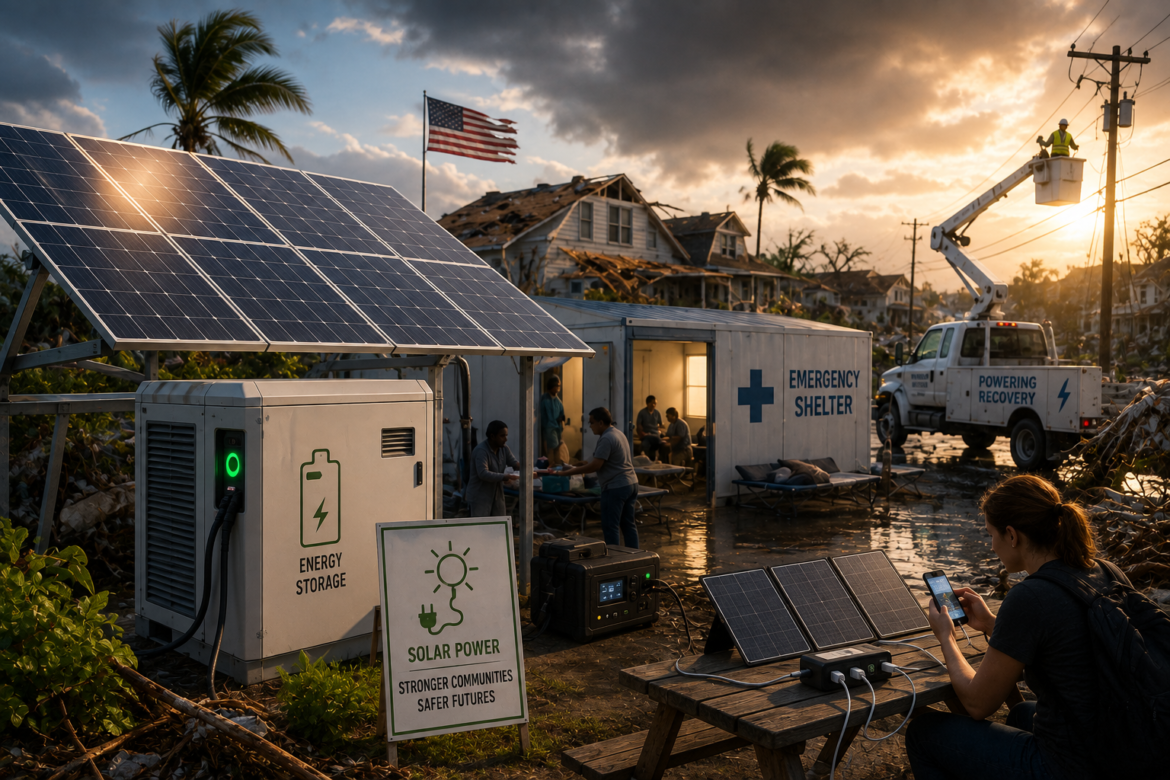
One of the most important uses of solar energy in disasters is powering emergency shelters and critical facilities. When people lose their homes, they need safe places to stay with access to light, heat, and communication. Solar-powered shelters can provide all of this without relying on the grid.
Hospitals, fire stations, and police departments also benefit from solar energy. These facilities need reliable power to operate life-saving equipment, communicate with the public, and coordinate response efforts. Solar systems with battery backup ensure that these critical services can continue even during extended outages.
Supporting Communication and Coordination
In the aftermath of a disaster, communication is key. Emergency responders need to coordinate efforts, and families need to stay in touch. Solar energy can power communication towers, charging stations, and mobile command centers. This helps ensure that vital information can flow even when the grid is down.
Solar-powered charging stations are especially useful for individuals. They allow people to charge phones, tablets, and other devices, helping them stay connected with loved ones and access emergency information.
Enabling Quick Deployment of Temporary Power
Solar energy systems are modular and portable, making them ideal for quick deployment in disaster zones. Temporary solar arrays can be set up in hours to provide immediate power to affected areas. These systems can be moved as needed, making them flexible tools for emergency response.
For example, after Hurricane Ian hit Florida in 2022, solar trailers were deployed to provide power to communities that had lost electricity. These trailers could be moved from neighborhood to neighborhood, ensuring that more people had access to power during recovery.
Real-World Examples of Solar in Action
Puerto Rico: Solar Microgrids After Hurricane Maria
Hurricane Maria devastated Puerto Rico’s power grid in 2017, leaving many without electricity for months. In the aftermath, solar microgrids became a lifeline for communities. These systems provided power to hospitals, schools, and community centers when the main grid was nonfunctional.
One notable example is the solar microgrid at the Hospital del Niño in San Juan. This system kept the hospital running during the outage, ensuring that critical medical care could continue. Other communities also benefited from solar-powered water pumps, communication systems, and lighting.
California: Solar and Storage During Wildfires
California faces frequent wildfires, which often lead to planned power outages to prevent fires from spreading. Solar energy systems with battery storage have helped communities cope with these outages. In some cases, solar microgrids have kept entire neighborhoods powered during fire season.
For example, the Blue Lake Rancheria in Northern California used its solar microgrid to stay powered during the 2019 Kincade Fire. The microgrid provided electricity to the tribe’s community center, which served as an emergency shelter for residents.
Texas: Solar Resilience During Winter Storms
In 2021, Winter Storm Uri left millions of Texans without power. While solar panels were affected by the extreme cold, some solar-plus-storage systems continued to provide power. These systems helped keep critical facilities running and demonstrated the potential for solar to contribute to resilience even in extreme weather.
Challenges and Considerations
Upfront Costs and Funding
One of the biggest challenges to deploying solar energy for disaster resilience is the upfront cost. Solar systems, especially those with battery storage, can be expensive to install. However, the long-term benefits often outweigh the initial investment.
Federal and state grants, as well as private funding, can help offset these costs. Programs like the Federal Emergency Management Agency (FEMA) Hazard Mitigation Grant Program and the Department of Energy’s Solar for All initiative provide funding for solar projects that enhance resilience.
Maintenance and Durability
Solar systems need to be maintained to ensure they function properly during disasters. This includes regular inspections, cleaning, and repairs. In disaster-prone areas, systems should be designed to withstand extreme weather, such as high winds, heavy rain, and hail.
Proper installation and maintenance can help ensure that solar systems remain operational when they’re needed most. Communities should work with experienced installers who understand the unique challenges of their region.
Integration with Existing Infrastructure
Integrating solar energy into existing infrastructure can be complex. It requires coordination between utilities, emergency managers, and community leaders. However, the benefits of integration—such as improved reliability and faster recovery—make it worth the effort.
Microgrids, which can operate independently from the main grid, are a key tool for integration. They allow solar energy to be used locally while still connecting to the larger grid when needed.
The Future of Solar in Disaster Resilience
Innovations in Solar Technology
Solar technology is constantly evolving, with new innovations making systems more efficient, affordable, and resilient. Bifacial solar panels, which capture sunlight from both sides, can generate more power in less space. Perovskite solar cells, a new type of solar technology, promise even higher efficiency and lower costs.
Battery storage is also improving. New battery chemistries, such as solid-state batteries, offer longer life and greater safety. These advances will make solar-plus-storage systems even more valuable for disaster resilience.
Policy and Incentives
Government policies and incentives play a crucial role in promoting solar energy for disaster resilience. Tax credits, rebates, and grants can make solar more affordable for communities and individuals. Policies that encourage the development of microgrids and community solar projects can also enhance resilience.
At the federal level, the Infrastructure Investment and Jobs Act and the Inflation Reduction Act provide funding and incentives for clean energy projects, including those that enhance resilience. State and local governments can also implement policies that support solar deployment in disaster-prone areas.
Community Engagement and Education
Community engagement and education are essential for maximizing the benefits of solar energy in disasters. Communities need to understand how solar systems work, how to maintain them, and how to use them during emergencies.
Educational programs, workshops, and outreach efforts can help build this knowledge. By empowering communities with information, we can ensure that solar energy is used effectively to enhance resilience and support recovery.
How Individuals and Communities Can Get Involved
Installing Solar at Home
Individuals can contribute to disaster resilience by installing solar panels on their homes. Even a small system can provide backup power during outages, keeping lights, refrigerators, and communication devices running.
When installing solar, consider adding battery storage for greater resilience. Look for systems that are designed to withstand local weather conditions and work with experienced installers.
Supporting Community Solar Projects
Community solar projects allow multiple households to share the benefits of a single solar array. These projects can provide power to entire neighborhoods during outages and are especially useful for renters and those who can’t install solar on their own homes.
Supporting or participating in community solar projects is a great way to enhance local resilience. Many communities have existing projects, and new ones are being developed all the time.
Advocating for Solar-Friendly Policies
Advocacy is another way to promote solar energy for disaster resilience. Contacting local and state representatives, attending public meetings, and supporting organizations that promote clean energy can help create policies that support solar deployment.
By raising awareness and advocating for change, individuals and communities can help ensure that solar energy plays a central role in disaster resilience and recovery efforts.
Final Thoughts
Solar energy is more than just a clean power source—it’s a tool for resilience and recovery. From keeping the lights on during outages to speeding up recovery and building long-term strength, solar power is transforming how communities respond to disasters.
As climate change leads to more frequent and severe weather events, the role of solar energy in disaster resilience will only grow. By investing in solar now, communities can protect themselves against future storms and ensure that they have the power they need when it matters most.
Whether you’re an individual, a community leader, or a policymaker, there are ways to get involved. From installing solar at home to supporting community projects and advocating for change, everyone can play a part in building a more resilient future.
The sun is shining, and with it comes the power to keep communities safe, connected, and strong—no matter what disasters may come.