Hey there, sunshine seeker! If you’ve ever wondered how those glowing solar panels are powering more than just your home, you’re in for a treat. Solar energy isn’t just about clean power—it’s sparking a job boom across the U.S. In this post, we’ll dive into the real impact of solar on job creation and employment. We’ll look at the numbers, the types of jobs, where they’re popping up, and what it all means for everyday folks like you and me. Ready to get energized? Let’s roll!
Solar power has been one of the fastest-growing industries in America, and it’s creating jobs left and right. According to the U.S. Department of Energy’s Solar Energy Industries Association (SEIA) reports, the sector employed over 263,000 people in 2023 alone, up from just a handful a decade ago. That’s not pocket change—it’s real careers putting food on tables and building communities. But why solar? Simple: demand for renewable energy is skyrocketing as costs drop and tech improves. Installing panels, manufacturing them, and maintaining systems all need skilled hands. Plus, government incentives like the Inflation Reduction Act are supercharging this growth, promising even more hires.
Think about it—solar jobs aren’t just for engineers in lab coats. They’re for roofers climbing ladders, truck drivers hauling gear, and salespeople chatting up homeowners. This variety pulls in workers from all walks of life, making it easier to switch careers without starting from scratch. And the best part? These gigs often pay well above average. The median wage for solar workers hovers around $28 per hour, beating many traditional energy jobs. No wonder folks are flocking to this sunny field!
The Types of Jobs Solar Energy is Creating Nationwide
Solar’s job magic comes in all shapes and sizes. Let’s break it down so you can picture yourself (or your neighbor) in one of these roles.
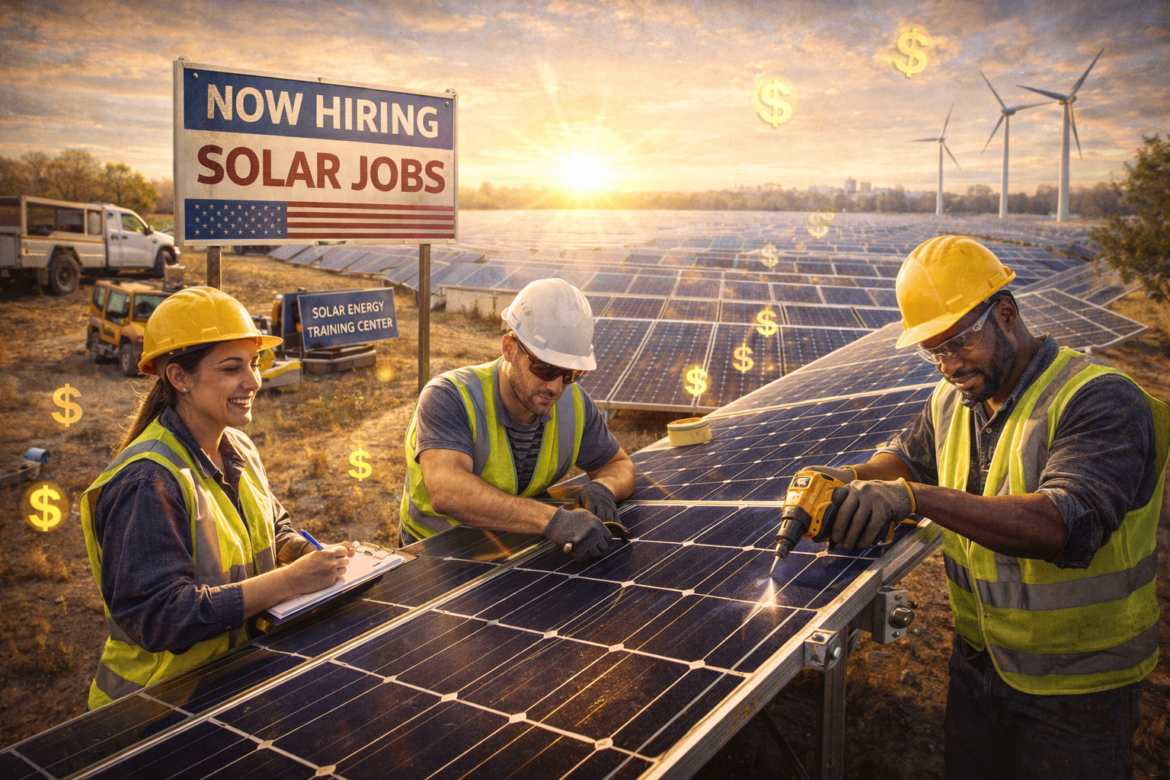
First up: installation and operations. This is the biggest slice of the pie, accounting for about 57% of solar jobs. Picture teams of technicians slapping panels on rooftops, wiring up inverters, and testing systems to make sure your power flows smoothly. It’s hands-on work that’s exploding because every new solar farm or home setup needs these pros. In fact, installers saw a 6% job growth in 2023, and experts predict it’ll keep climbing as more states hit renewable goals.
Next, manufacturing. Solar panels don’t build themselves! Factories crank out cells, modules, and batteries, employing welders, machine operators, and quality checkers. States like Ohio and Georgia are hotspots here, with new plants opening thanks to federal tax credits. These jobs are steady and often union-backed, offering benefits that make long-term careers shine bright.
Don’t forget sales, project development, and support roles. Ever seen those ads for “go solar and save”? That’s the sales team at work, pitching deals and crunching numbers. Then there are engineers designing massive solar arrays, financiers securing loans, and marketers spreading the word. These white-collar spots make up about 20% of the workforce and are growing fast as companies scale up.
Oh, and a fun fact: solar creates more jobs per dollar invested than fossil fuels. A 2024 National Renewable Energy Laboratory (NREL) study found that every million dollars in solar spending supports 7.8 jobs, compared to just 5.2 for coal. That’s efficiency with a side of employment punch!
Where Solar Jobs Are Booming Across the U.S.
Solar isn’t just a California thing—it’s spreading like wildfire nationwide. Let’s zoom in on the hotspots and see how they’re transforming local economies.
California leads the pack, no surprise there. With over 50,000 solar jobs, it’s the king of installations thanks to sunny skies and aggressive clean energy mandates. Places like Los Angeles and San Diego are buzzing with technicians and developers. But it’s not all coastal glamour—rural areas are getting in on farms that power thousands of homes.
Texas is the dark horse, surging with 33,000 jobs. Wind and solar pair perfectly here, and vast open lands make for epic solar ranches. Austin and Houston are hubs for manufacturing and engineering roles, drawing workers from oil fields who pivot their skills seamlessly.
Florida’s no slouch either, with humid heat perfect for panels. Over 15,000 jobs focus on rooftop installs for homes battered by hurricanes—solar adds resilience and paychecks. Then there’s New York, pushing 12,000 roles through community solar projects that serve apartments and small towns.
Even heartland states like Ohio (10,000+ jobs) and Nevada are lighting up. Ohio’s factories are churning panels, while Nevada’s deserts host gigawatt-scale projects. The South and Midwest are catching up fast, thanks to falling panel prices and Biden-era policies extending tax breaks through 2032.
This geographic spread is gold for employment. Rural areas gain stable gigs without relying on fading coal mines, while cities get high-tech innovation. A 2025 SEIA forecast predicts 500,000 solar jobs by 2030, adding $100 billion to the economy. That’s jobs flowing to red states, blue states, and everywhere in between!
Challenges and the Bright Future of Solar Employment
Okay, it’s not all smooth sailing—let’s keep it real. Solar jobs face hurdles like supply chain hiccups (hello, global chip shortages) and weather delays for installs. Training is key too; not everyone knows how to handle high-voltage systems safely. But here’s the upbeat part: programs like the Solar Ready Vets initiative are retraining military folks, and community colleges offer quick certifications. Over 80% of solar workers say it’s easier to enter than other trades.
Wages are climbing, but some entry-level spots start low. The good news? Experience pays off quick—senior installers earn $60K+ yearly. Diversity is improving too; women now hold 40% of roles, up from 20% a decade ago, and initiatives target underrepresented communities.
Looking ahead, automation might nibble at manufacturing edges, but it creates tech jobs to run the robots. Policy-wise, extending incentives could double growth. Imagine: by 2035, solar could employ 1 million Americans, per NREL projections. That’s a workforce as vast as the panels they install!
Solar also boosts indirect jobs. Think suppliers making glass for panels, coders building monitoring apps, or truckers delivering gear. A University of Utah study pegged these at 2-3 times direct hires. Local economies thrive—solar counties see 2% higher employment rates overall.
How Solar Jobs Are Changing Lives
To make it personal, meet folks riding the solar wave. Take Maria in Texas, a former oil roughneck now leading install crews. “The pay’s steady, no boom-bust cycles, and I’m home for dinner,” she shares. Or Jamal in Florida, trained via a free program, now earning $55K fixing hurricane-damaged systems.
In Ohio, veteran Tom pivoted to manufacturing. “Solar gave me purpose post-service—plus, benefits for my family.” These stories aren’t rare; surveys show 90% job satisfaction in solar, higher than average U.S. workers.
Businesses win too. Small firms like Sunrun hire thousands seasonally, while giants like First Solar expand factories. Unions are jumping in, securing better deals and apprenticeships.
Massive Solar Energy Impact
Solar energy’s impact on U.S. job creation? Massive, positive, and growing. From 263,000 jobs today to half a million soon, it’s reshaping employment with diverse, well-paying roles nationwide. Challenges exist, but the momentum—fueled by tech, policy, and plain old demand—is unstoppable.
Whether you’re job hunting, policymaking, or just curious, solar’s proving clean energy means full employment. It’s not hype; it’s happening now, panel by panel. Want to join? Check SEIA’s job board or local training programs. The sun’s always hiring!