If you’ve ever sat at a bus stop with a panel on the roof, driven past a highway with solar‑topped parking shelters, or wondered whether electric‑vehicle charging stations could ever run on sunshine, you’re not alone. Across the United States, solar energy is quietly becoming part of the backbone of transportation—from how transit vehicles move to how stations light up and how electric cars refuel. The question “How is the United States utilizing solar energy to power its transportation infrastructure?” opens the door to a surprisingly practical and ongoing shift, not just a futuristic experiment.
At its core, the U.S. is using solar power in three main ways: as clean electricity for transit facilities and equipment, as a renewable source for charging electric vehicles, and as part of a broader strategy to make roads and stations more energy‑efficient and resilient. Let’s break this down into how it actually works in real‑world projects.
How solar powers transportation buildings and systems
Solar energy in the U.S. transportation sector often starts with infrastructure, not vehicles. Transit agencies, airports, and highway departments are installing photovoltaic panels on rooftops, parking lots, and along rights‑of‑way to generate electricity that powers lighting, ticketing systems, security cameras, and maintenance facilities.
Many bus depots and rail yards now have solar carports over their parking spaces. These canopies not only protect vehicles from the sun but also host arrays of solar panels that feed electricity back into the grid or into on‑site storage. This helps cut electric bills and lowers the carbon footprint of moving people and goods. Some airports, for example, have installed solar fields on idle land around runways to power control towers, baggage‑handling systems, and even de‑icing equipment tied to the ground‑transport network.
In smaller towns and rural areas, solar is also used for “off‑grid” needs like traffic lights, emergency signs, and highway‑warning systems. Instead of relying on long‑distance power lines, these systems use small solar panels paired with batteries. This keeps signals running during storms or outages, improving safety and reliability without adding much visual clutter to the roadside.
Solar‑powered public transit and buses
Public transportation is one of the most visible places where solar and transportation connect. Many U.S. cities are combining solar with electric buses and light‑rail systems. Exact setups vary, but the logic is simple: solar panels on maintenance depots or parking‑lot canopies generate electricity that feeds into the charging stations for electric buses.
For example, some transit agencies install rooftop solar on their main garages and then use that locally‑generated power, often backed up by batteries, to charge overnight. This means the buses are not only running on electricity instead of diesel, but the electricity itself comes largely from the sun. Over time, this reduces fuel costs, lowers air pollution in neighborhoods, and gives transit agencies more control over their energy budgets.
Even in cities where solar cannot supply 100% of the transit load, blending it with the grid still has value. When a depot runs partly on solar during daylight hours, it reduces strain on the grid at peak times and can help avoid higher electricity rates. Some projects also use solar‑equipped bus shelters that power LED lighting, information displays, and sometimes even USB charging ports for passengers, turning waiting time into a slightly brighter and more useful experience.
Charging stations for electric vehicles and highway rest areas
Another big way the U.S. uses solar energy is in powering electric‑vehicle (EV) charging infrastructure along highways and in cities. As more drivers switch to electric cars, buses, and delivery vans, there’s a growing need for charging stations that are not only fast but also sustainable.
Several states and private companies are now rolling out solar‑plus‑battery “microgrids” at highway rest areas, truck stops, and fleet depots. These sites combine large solar arrays with energy storage systems so that even when the sun isn’t shining, there’s still clean power available to charge vehicles. For long‑haul trucks, that can mean plugging in overnight using solar‑generated electricity stored earlier in the day.
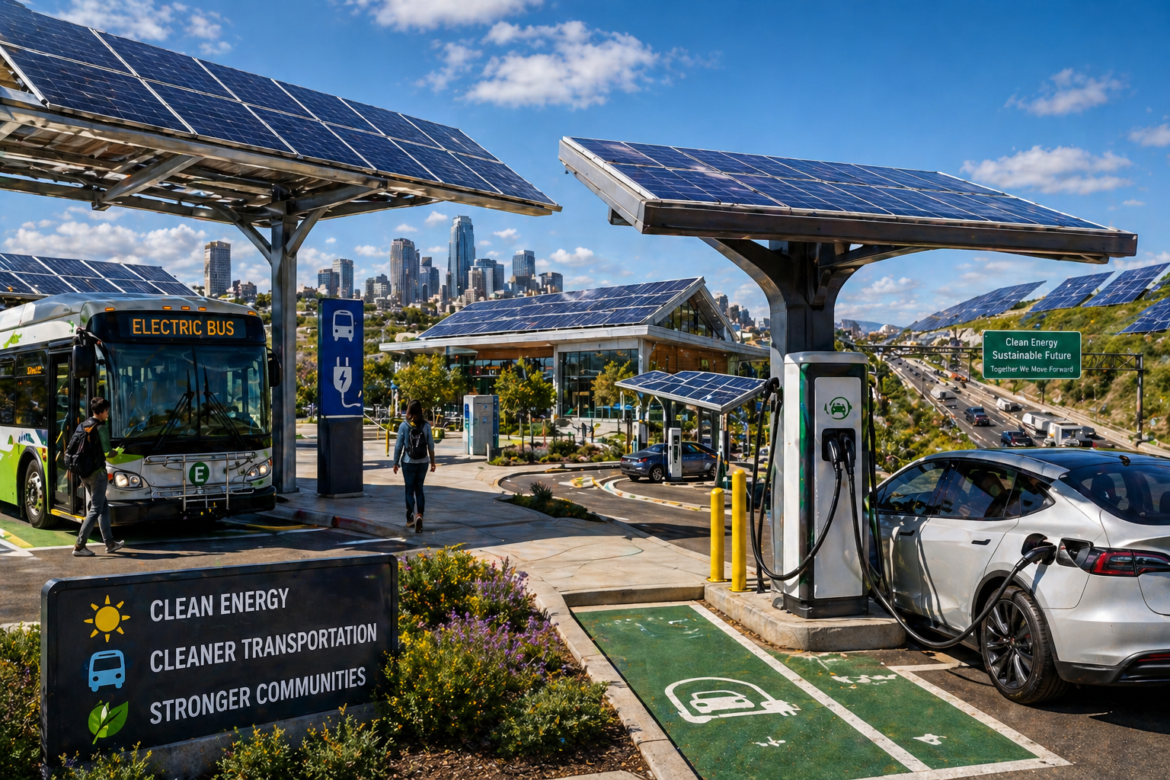
In urban areas, solar‑carport EV charging stations are popping up at shopping malls, transit hubs, and office buildings. Drivers can park under panels that shade their cars while the panels feed electricity directly into the chargers or into the building’s grid. This not only supports the growth of EVs but also improves the overall energy efficiency of the transportation ecosystem, from personal cars to delivery fleets.
Road‑adjacent solar farms and pilot projects
Beyond parking lots and stations, the U.S. is exploring more ambitious ways to tie solar directly into the transportation network. One idea gaining attention is “solar‑along‑roads,” where solar panels are installed on the sides of highways, on sound barriers, or even on the embankments between lanes. These installations don’t interfere with traffic but can still generate significant amounts of electricity that power nearby infrastructure or feed into the grid.
Some states and pilot projects have also experimented with solar‑powered road‑and‑rail signaling systems, toll plazas, and weigh‑stations. Instead of drawing all power from the main grid, these sites use solar to reduce demand spikes and lower operating costs. In remote or mountainous regions, solar‑powered variable‑message signs and camera systems can operate for months without needing a traditional power line, making highway management cheaper and more flexible.
These projects are still evolving, and not every experiment becomes permanent. But they show a clear trend: transportation planners are treating solar not as a side accessory but as a serious part of the energy mix for how roads and transit systems are powered.
Why solar makes sense for transportation
From an energy‑use perspective, transportation is a major player in the U.S. economy. A large share of total energy consumption goes into moving people and goods, mostly from petroleum‑based fuels. Adding solar into the mix helps reduce reliance on fossil fuels without asking travelers to change their routes or schedules.
Solar has several practical advantages for transportation infrastructure. First, it’s predictable on sunny days, and when paired with batteries it can provide steady power through the night or during cloudy stretches. Second, many transportation sites—rooftops, parking lots, and open highway land—already have space that can host solar panels without taking away room from other uses. Third, solar tends to produce the most electricity when demand for cooling and lighting is highest, which often overlaps with peak travel times.
For decision‑makers, the benefits stack up: lower long‑term electricity costs, improved resilience during power outages, and measurable progress toward clean‑energy and climate goals. For regular drivers and riders, that can translate into cleaner air, quieter electric buses, and the quiet satisfaction of knowing that a bit of their trip is being powered by the sun.
Challenges and limitations to keep in mind
While solar is helping power transportation infrastructure, it’s not a perfect or complete solution on its own. Sunlight is variable, and not every state gets the same amount of sunshine, so the effectiveness of solar depends a lot on location and weather patterns. California, Arizona, and Texas can support large solar‑transport projects more easily than very cloudy or northern regions, which may need more battery storage or supplemental grid power.
There are also upfront costs and coordination challenges. Installing solar panels, inverters, wiring, and storage systems requires planning, permits, and maintenance. Integrating solar with existing transportation systems—like traffic‑signal networks or bus‑scheduling software—can involve technical and bureaucratic work. Some projects move slowly because of budget limits, procurement rules, or the need to balance competing priorities like road repairs and safety upgrades.
Still, as solar hardware and batteries get cheaper and more efficient, these barriers are shrinking. Federal and state incentives, utility‑scale solar contracts, and creative financing models are making it easier for cities and highway agencies to treat solar as a normal part of planning, not an exotic add‑on.
How solar fits into the bigger picture
The way the U.S. uses solar for transportation infrastructure is part of a larger energy‑and‑mobility shift. Between electric vehicles, smart‑grid upgrades, and renewable‑energy targets, transportation is being redesigned so that movement and energy use are less polluting and more flexible. Solar is one piece of that puzzle, but a growing and visible one.
In practice, this means that when you charge your EV at a station under a solar canopy, ride a solar‑powered electric bus, or see a highway sign lit by a small roadside panel, you’re engaging with a system that’s being built to run partly on sunshine. It’s not just about cutting carbon; it’s about making transportation more resilient, cheaper to operate, and easier to expand as the country grows.
For travelers and communities, the changes are subtle but meaningful: cleaner air from fewer diesel buses, quieter charging stations away from residential areas, and more reliable signals and information systems thanks to solar‑backed power. Over time, as more solar gets woven into roads, parking structures, stations, and fleets, the question isn’t just “How is the United States using solar energy for transportation?” but “How far can this combination of sunshine and motion go?”
In other words, solar is already helping to power the way Americans move, and it’s likely to play an even bigger role in the infrastructure that keeps cities, highways, and transit networks running in the years ahead.