Hey there! If you’ve ever driven through the wide-open spaces of rural America, you’ve probably spotted those shiny solar panels popping up on barns, farms, and even rooftops of cozy homes. Solar energy isn’t just a city slicker trend anymore—it’s lighting up rural communities across the U.S. in big, sunny ways. But how exactly are these areas cashing in on the sunshine? Let’s dive into the real perks, from slashing bills to sparking jobs, all backed by what’s happening right now. Whether you’re a farmer pondering panels or just curious about green living, here’s the scoop on how solar is making rural life brighter, cheaper, and more resilient.
Economic Wins: Saving Money and Creating Jobs
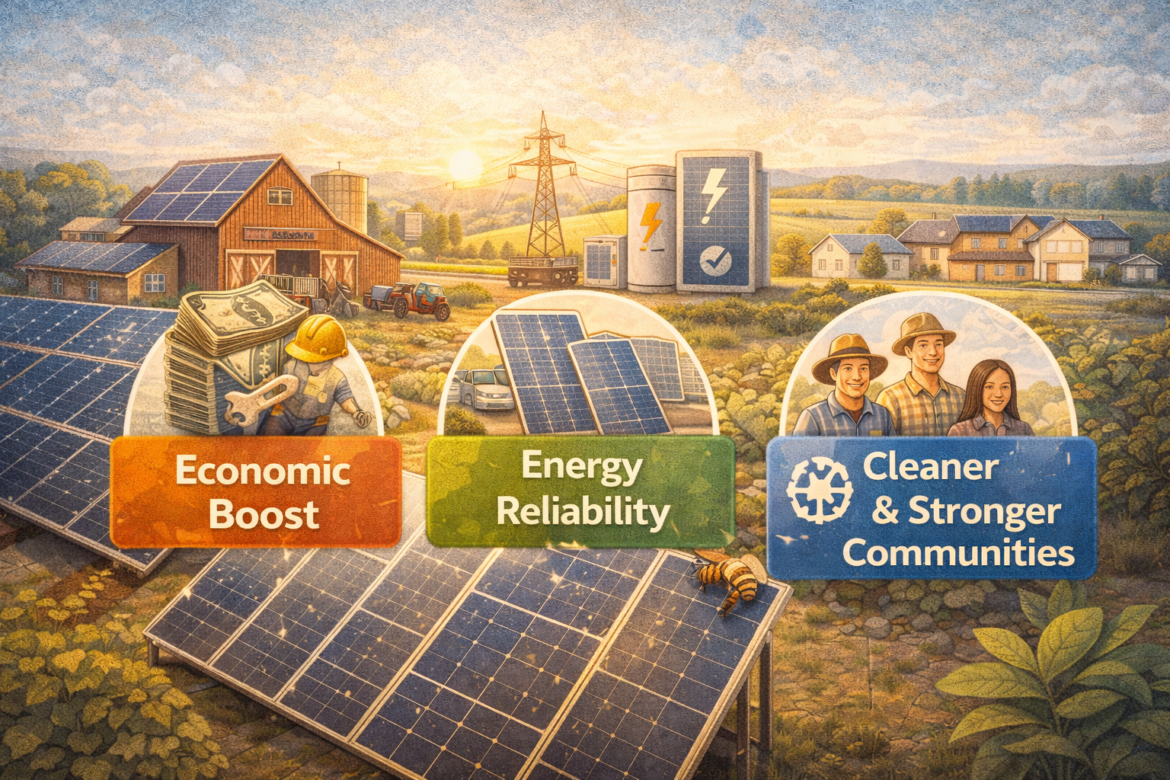
Picture this: a family farm in Iowa that’s been hit hard by rising electricity costs. Now, with solar panels on the barn roof, their power bill has dropped by 70%. That’s no fairy tale—it’s happening in rural spots from the Midwest to the Appalachians. One of the biggest wins for rural U.S. communities is the straight-up cash savings from lower energy bills. Traditional power lines stretching miles to remote farms are pricey to maintain, often leading to high rates from utilities. Solar flips that script by generating free power from the sun after the initial setup.
Take the numbers: According to the National Renewable Energy Laboratory (NREL), rural households with solar can save up to $20,000 over 20 years. Farms see even bigger gains. Dairy operations in Wisconsin, for example, use solar to run milking machines and refrigeration, cutting diesel generator use and saving thousands annually. A 2023 report from the U.S. Department of Agriculture (USDA) highlights how solar adoption has helped over 10,000 rural farms reduce energy costs by an average of 25%. It’s like finding extra cash in your jeans—except it’s powering your whole operation.
But it’s not just about pinching pennies; solar is sparking jobs too. Rural areas often struggle with employment after factories close or crops falter. Solar installation, maintenance, and manufacturing create steady gigs. In states like Texas and North Carolina, solar farms employ locals for everything from panel assembly to land prep. The Solar Energy Industries Association (SEIA) reports that solar jobs grew by 6% in 2024 alone, with rural counties grabbing a big slice—over 50,000 positions nationwide. Imagine a small town in Oklahoma where a community solar project hired 200 residents during construction. Those paychecks stay local, boosting diners, shops, and schools.
Plus, there’s income from selling excess power back to the grid through net metering. In places like Minnesota, farmers lease land for solar arrays and pocket lease payments rivaling corn yields. One Nebraska co-op turned 100 acres of marginal farmland into a solar site, generating $150,000 yearly for members. It’s a win-win: land stays productive without tilling, and communities get reliable revenue streams. No wonder rural electric co-ops, which serve 42 million Americans (mostly in countryside spots), are going all-in on solar—over 200 have projects underway.
Energy Reliability: Power Up Without Blackouts
Rural life has its charms, but spotty power isn’t one of them. Long power lines snake through storms and wildlife territory, causing outages that can last days. Enter solar: it’s turning rural America into a powerhouse of reliability. Battery storage paired with panels means lights stay on when the grid fails. In tornado-prone Kansas, a solar-plus-storage system kept a rural clinic humming during a 2024 blackout, saving perishable meds and patient care.
Why does this matter so much out in the sticks? Farms can’t afford downtime—think automated chicken houses or irrigation pumps grinding to a halt. Solar microgrids fix that. In California’s Central Valley, almond growers installed off-grid solar setups that pump water 24/7, even during peak summer heatwaves. NREL data shows these systems cut outage impacts by 90%, letting businesses operate smoothly. It’s like having your own personal power plant, immune to distant grid glitches.
Communities are teaming up too. In rural Georgia, a group of neighbors crowdfunded a solar array with batteries, sharing power via a mini-grid. When Hurricane Idalia hit in 2023, they powered the local fire station and food bank for a week. No generators guzzling fuel—just clean, stored sunshine. The USDA’s Rural Energy for America Program (REAP) has funded over $1 billion in such projects since 2003, proving solar isn’t just backup; it’s frontline defense against nature’s curveballs.
And let’s not forget remote spots. In Alaska’s vast rural expanses, where diesel is trucked in at huge costs, solar hybrids have slashed fuel use by 80%. Villages like Shungnak now enjoy steady electricity without the blackouts that used to freeze homes. It’s empowering—folks aren’t at the mercy of utility trucks anymore.
Environmental and Health Boosts: Cleaner Air, Healthier Lives
Solar isn’t just about watts; it’s weaving a healthier, greener fabric for rural America. Farms and small towns often bear the brunt of pollution from coal plants or diesel backups, leading to asthma spikes and dirty water. Solar adoption is clearing the air, one panel at a time.
Start with reduced emissions. A single farm solar system in Montana offsets as much CO2 as planting 100 trees yearly. Scaled up, rural solar projects have avoided 10 million tons of emissions since 2020, per SEIA stats. In coal-heavy West Virginia, community solar gardens are replacing dirty power, improving air quality for kids playing outside. Cleaner skies mean fewer hospital visits—rural health costs drop when respiratory issues plummet.
Water savings are huge too. Traditional power guzzles water for cooling; solar uses none. In drought-struck Colorado, ranchers with solar-powered wells save thousands of gallons daily, preserving aquifers for cattle and crops. One study by the Environmental Protection Agency (EPA) found rural solar adopters cut water use by 30%, a lifeline in arid regions.
Biodiversity gets a lift as well. Solar farms on former pastureland create habitats for pollinators. In Illinois, a 5-megawatt array became a haven for bees and birds, boosting nearby crop yields by 15% through better pollination. Farmers love it—it’s dual-purpose land use without chemicals.
Health-wise, reliable power means better refrigeration for meds and food in areas with few stores. During Texas’ 2021 freeze, solar-equipped rural homes kept insulin cold, averting crises. Programs like the Inflation Reduction Act’s solar tax credits have made panels affordable for low-income rural families, tying directly to wellness.
Community and Social Perks: Bringing Folks Together
Solar’s magic extends to the heart of rural life—strong communities. Shared solar projects foster neighborly bonds. In Vermont, a co-op installed panels on a town hall, funding scholarships with the savings. It’s not just power; it’s pride in self-reliance.
Education blooms too. Schools in rural New Mexico teach kids about renewables via hands-on solar labs, inspiring the next generation of green innovators. Job training programs in solar tech fill local colleges, keeping youth from migrating to cities.
Equity shines through. Initiatives target underserved areas—Native American reservations in Arizona now boast solar microgrids, ending energy poverty. The Biden-Harris administration’s $7 billion rural solar push via REAP ensures no community gets left in the dark.
Even tourism perks up. Solar-powered agritourism spots in Oregon draw eco-visitors, padding local economies.
Navigating Challenges and Looking Ahead
Sure, hurdles exist—like upfront costs or grid hookup snags—but incentives make it doable. Federal tax credits cover 30% (up to 50% for low-income), and state rebates sweeten the deal. Rural co-ops offer low-interest loans, and falling panel prices (down 89% since 2010) mean payback in 5-8 years.
Looking forward, experts predict rural solar capacity tripling by 2030. With bipartisan support and tech advances like agrivoltaics (panels over crops), benefits will multiply.
Thriving Rural U.S. Communities
Rural U.S. communities are thriving thanks to solar: fatter wallets, rock-solid power, pristine environments, and tighter-knit towns. From Iowa farms to Alaskan villages, the sun’s delivering real, feel-good change. Ready to harness it? Check out USDA REAP or your local co-op—your brighter tomorrow starts with a panel or two.